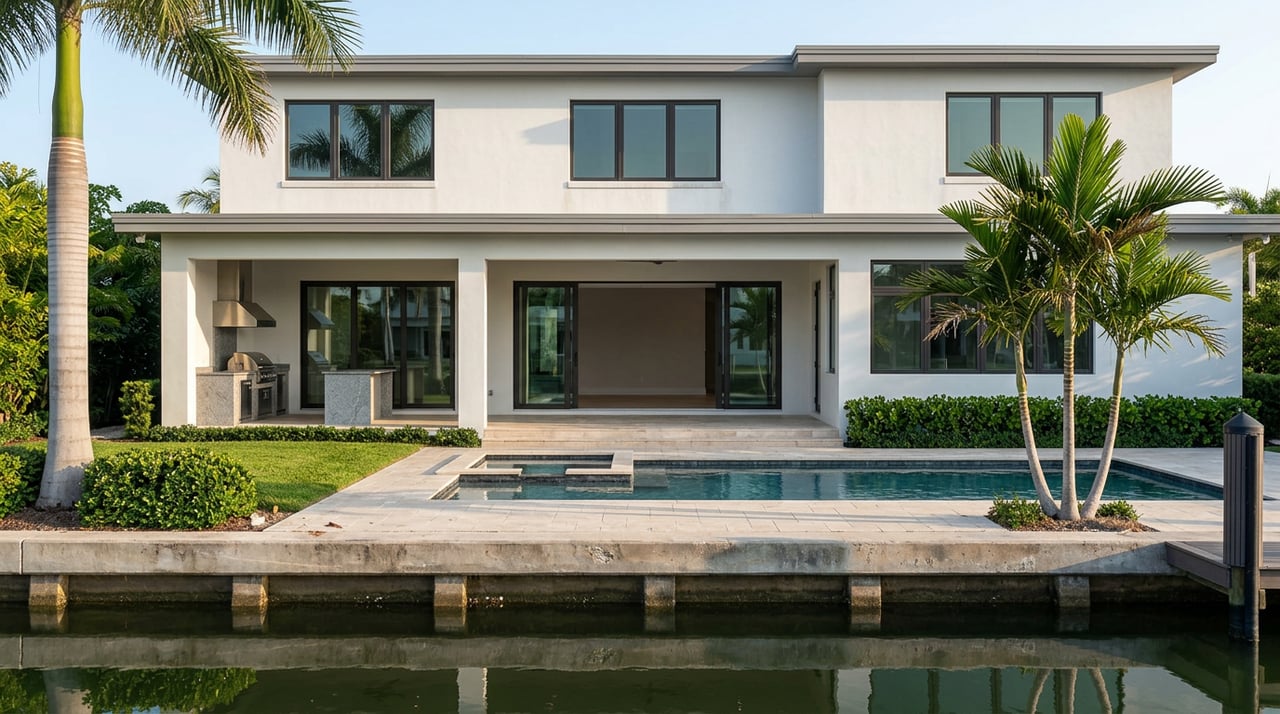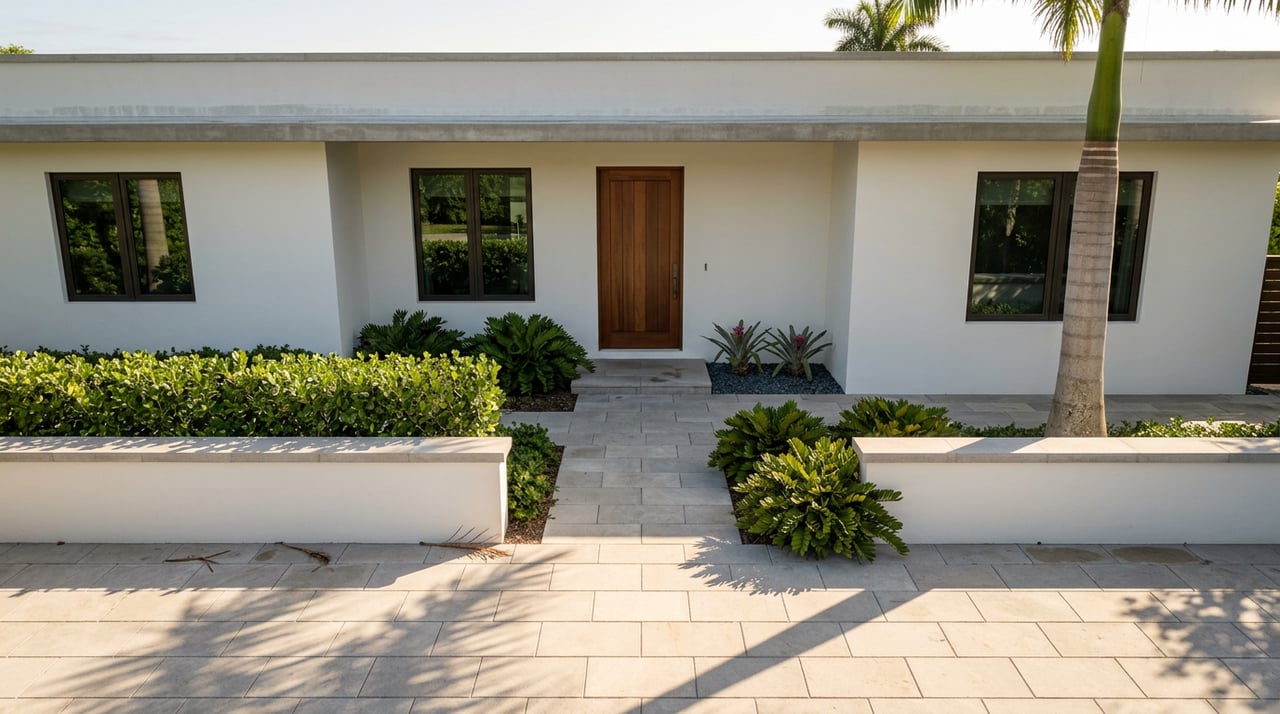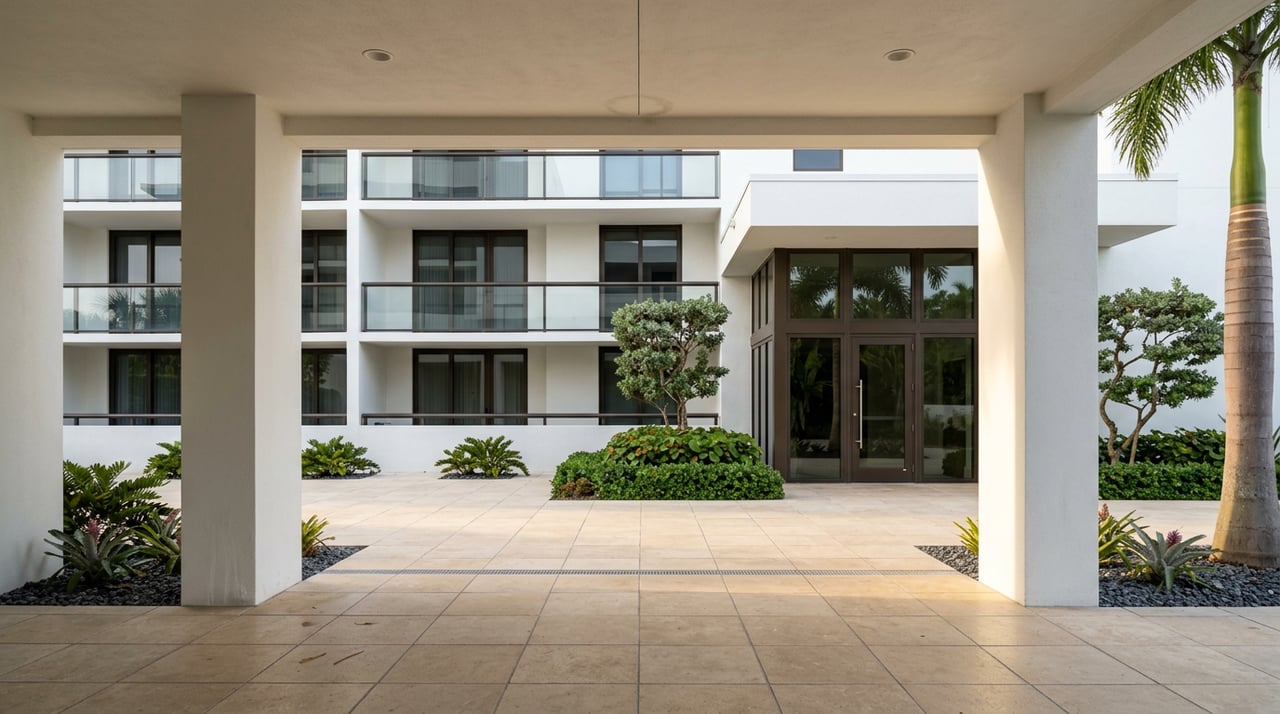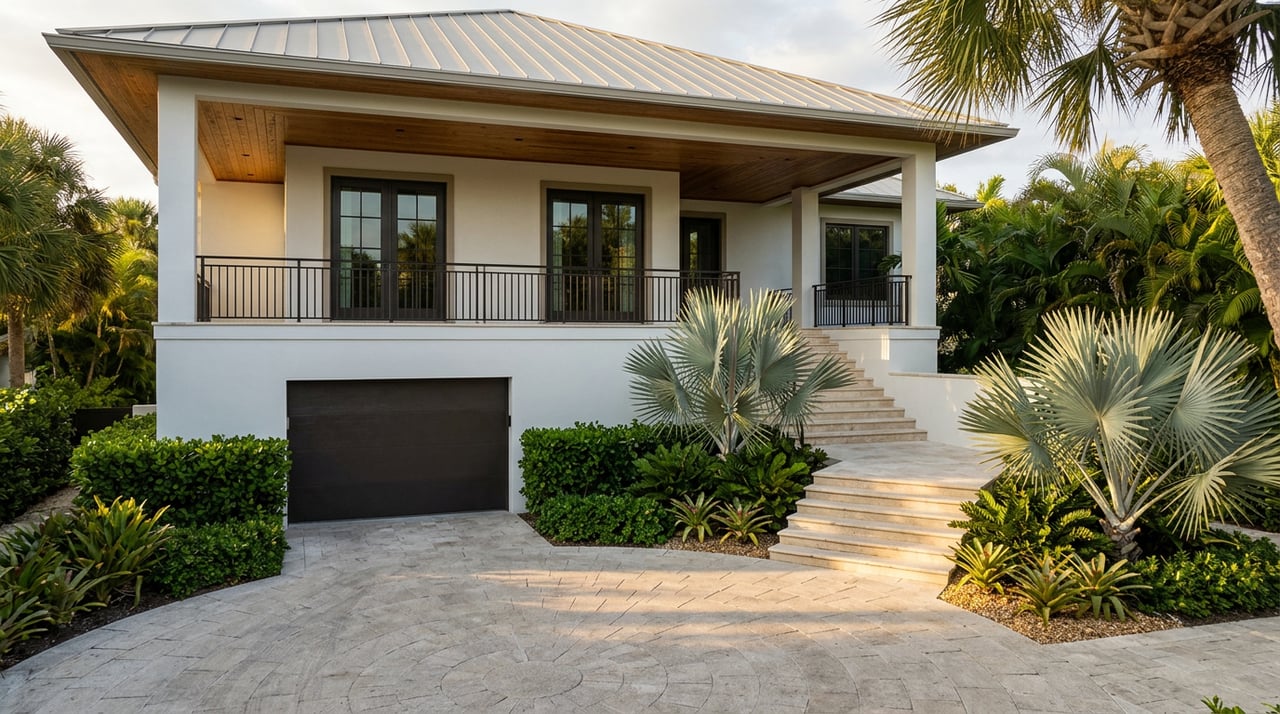
Two homes sit three doors apart on the same Moorings canal. Same lot depth, same generous canal frontage, same distance to open water with no fixed bridges in the way. One is listed as a renovation opportunity, a chance to update a well-built home from the neighborhood's original era without starting from scratch. The other, built on a nearly identical parcel, is listed almost entirely on its land value, with the existing structure treated as a placeholder until someone tears it down.
Buyers touring both assume the difference comes down to condition, maybe a roof that's further along in its life, or a kitchen that's never been touched. It usually doesn't. The real answer sits in a city floodplain file that neither listing mentions, and it explains more about Moorings pricing than square footage ever will.
What the 50% Rule Is Actually Measuring
Every home in a flood zone eventually runs into FEMA's Substantial Improvement standard, often shortened to the 50% rule. The concept is simple on paper: if the cost of a renovation equals or exceeds half the value of the structure itself, not the land, not the pool, not a detached garage, just the building, the entire structure has to be brought up to current flood code. In practice that usually means elevation.
The City of Naples isn't a marginal case here. More than 90 percent of addresses within city limits sit inside a Special Flood Hazard Area, according to the city's own floodplain management page, and Naples has been enrolled in the National Flood Insurance Program since 1971. The Moorings, developed in that same era along Moorings Bay and its canal system, is squarely inside that footprint. Nearly every original home on Harbour Drive or one of the interior canal streets is subject to this test the moment an owner picks up a permit for anything beyond cosmetic work.
What most buyers miss is that the rule has two moving parts, and Naples handles both differently than the county surrounding it.
Naples Runs a Shorter Clock Than Its Neighbors
The first variable is the lookback period, the window of time over which past renovation spending gets added up to see if it crosses the 50 percent line. This is where jurisdiction matters more than most buyers expect.
| Jurisdiction | Lookback period | What it means in practice |
|---|---|---|
| City of Naples | One year | Only permits pulled in the prior twelve months count toward the threshold |
| Collier County, unincorporated | Cumulative | Every improvement since the home was built or since the rule took effect can be added together |
| Lee County | Five years | Spending is aggregated over a rolling five-year window |
A one-year lookback is short. In Collier County's unincorporated areas, a kitchen remodel from a decade ago can still be tallied against a new addition today. In Naples, that same decade-old kitchen has already cycled out of the calculation. The practical result is that a Moorings owner who plans renovation phases carefully, staying under the threshold in any single twelve-month stretch, can update a home in stages over several years without ever triggering full compliance. An owner doing the identical scope of work just across the city line in unincorporated Collier County, or over in Lee County, could get caught by spending they'd long forgotten about.
This is not a loophole anyone advertises. It's a structural quirk of how the ordinance was written, and it means the same renovation plan carries a different risk profile depending on which side of a jurisdictional boundary the home sits on.
The Denominator Is Negotiable
The second variable is what the city counts as the structure's value in the first place, since that number is the denominator in the 50 percent math. The City of Naples starts with the Collier County Property Appraiser's assessed value and adds 20 percent. But the owner has the right to commission an independent appraisal instead, and use that figure if it comes in higher.
This matters more than it sounds. A higher recognized structure value means more dollars of renovation can happen before the 50 percent line is crossed. Two homes with the same county assessment, sitting on nearly identical lots, can end up with two different renovation ceilings depending entirely on whether the owner accepted the default assessed-value-plus-20 figure or paid for an independent appraisal that better reflects the home's actual rebuild cost.
The renovation budget a Moorings home can support isn't fixed by its condition. It's set by a valuation choice the owner makes, and that choice is invisible on the listing sheet.
For a seller weighing whether to invest in an appraisal before going to market, this is the entire argument. A structure that appraises meaningfully above the county's assessed figure can support a larger scope of buyer-side renovation without tripping the rule, which is a real selling point once a buyer's contractor runs the numbers.
What This Does to a Moorings Comp Sheet
Walk the corridor along Gulf Shore Boulevard, and along Outer Doctors Bay, and the pattern becomes visible. These are the pockets of the Moorings seeing the most concentrated rebuild activity, where original ranch and cottage-era homes are giving way to new construction built directly to current elevation standards. Teardown-rebuild projects in the neighborhood commonly land somewhere between roughly 3,500 and more than 7,000 square feet once complete, a scale that reflects both larger lot coverage and the economics of building to code once rather than incrementally.
Original homes on these same streets increasingly get priced as land, with the existing structure treated as a demolition cost rather than an asset. That's not a judgment on the house itself. It's a rational response to the 50 percent math: if a buyer's renovation wish list would plausibly cross the threshold anyway, pricing the structure as if it has independent value just creates a negotiating gap that shows up later in the transaction.
On the flip side, elevation certificates have become a genuine selling point on higher-priced Moorings listings, particularly above the $2 million mark. A certificate that shows real clearance above base flood elevation tells a buyer they're not walking into a 50 percent problem on day one. Homes without one, or with certificates showing marginal clearance, invite exactly the kind of scrutiny that slows a deal down during due diligence.
The Map Update Nobody's Pricing In Yet
The flood map still governing construction and insurance in Naples is the coastal Flood Insurance Rate Map adopted in February 2024. But Collier County's next Physical Map Revision, the update that would reset base flood elevations across the coast, was projected earlier this year for adoption sometime between August and October 2026. That window is open right now. Whether it lands this month or slides into fall, it will not stay pending indefinitely, and any resulting change to base flood elevations resets the baseline every calculation in this piece runs against.
That's not a reason to panic about a specific address. It is a reason to treat today's elevation certificate as a snapshot, not a permanent fact. A home that clears the current requirement comfortably could see that margin shrink once the new map takes effect, which changes the renovation math even for owners who have no plans to touch a hammer.
What to Actually Verify Before You Write an Offer
- Ask whether the seller's disclosed structure value comes from the county's assessed figure plus 20 percent, or from an independent appraisal, since that number sets the renovation ceiling
- Request the home's elevation certificate directly rather than assuming a flood zone letter tells the whole story
- Pull permit history for the trailing twelve months if you're buying in the city of Naples, since that window is what actually counts toward the 50 percent test here
- If you're planning renovation work rather than a full rebuild, get a private appraisal before finalizing scope and budget, because it can materially change what you're allowed to spend before triggering full flood compliance
The gap between a Moorings home priced as a renovation and one priced as land rarely comes down to how the kitchen looks. It comes down to a valuation choice, a twelve-month clock, and a flood map that's due for an update. None of that shows up in photos, and most of it never makes it into a listing description.
If you're comparing homes in The Moorings and trying to understand what you're actually buying, that distinction is worth walking through before you fall in love with a floor plan. Michael Moreiras works this corridor of Naples regularly and can help you read a Moorings listing the way an appraiser would, before you're deep into a contract. Let's Connect.