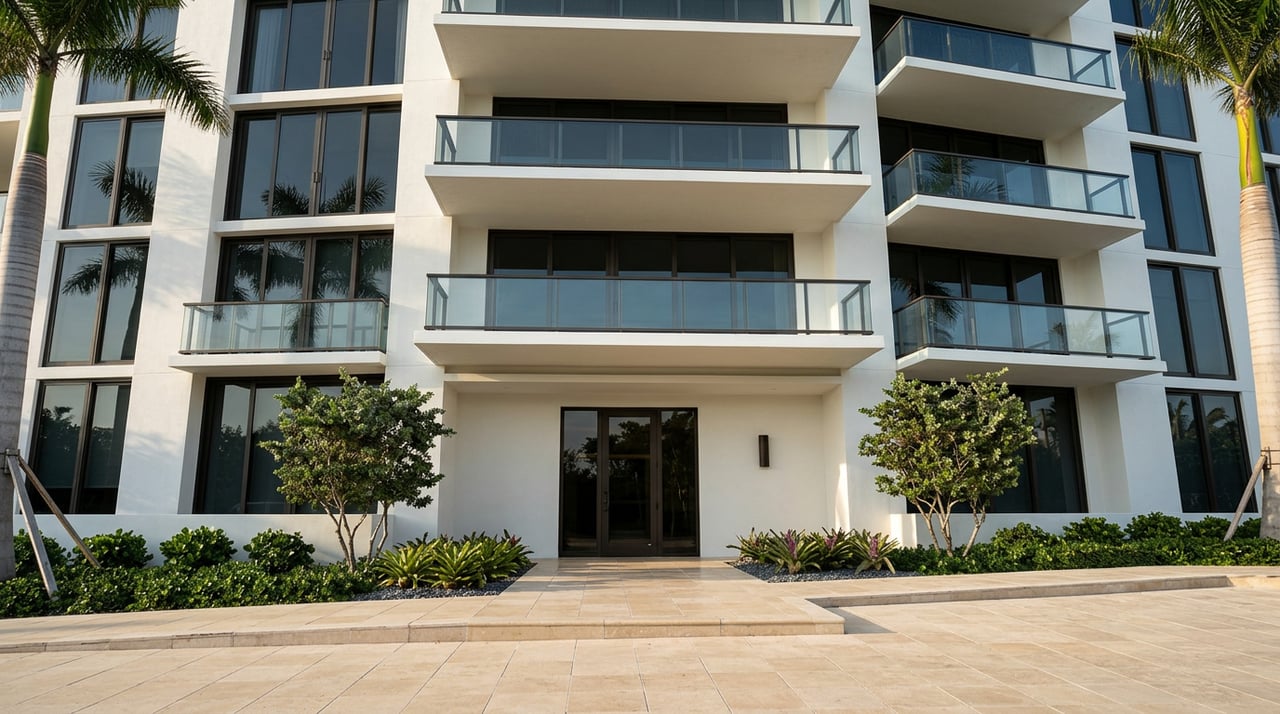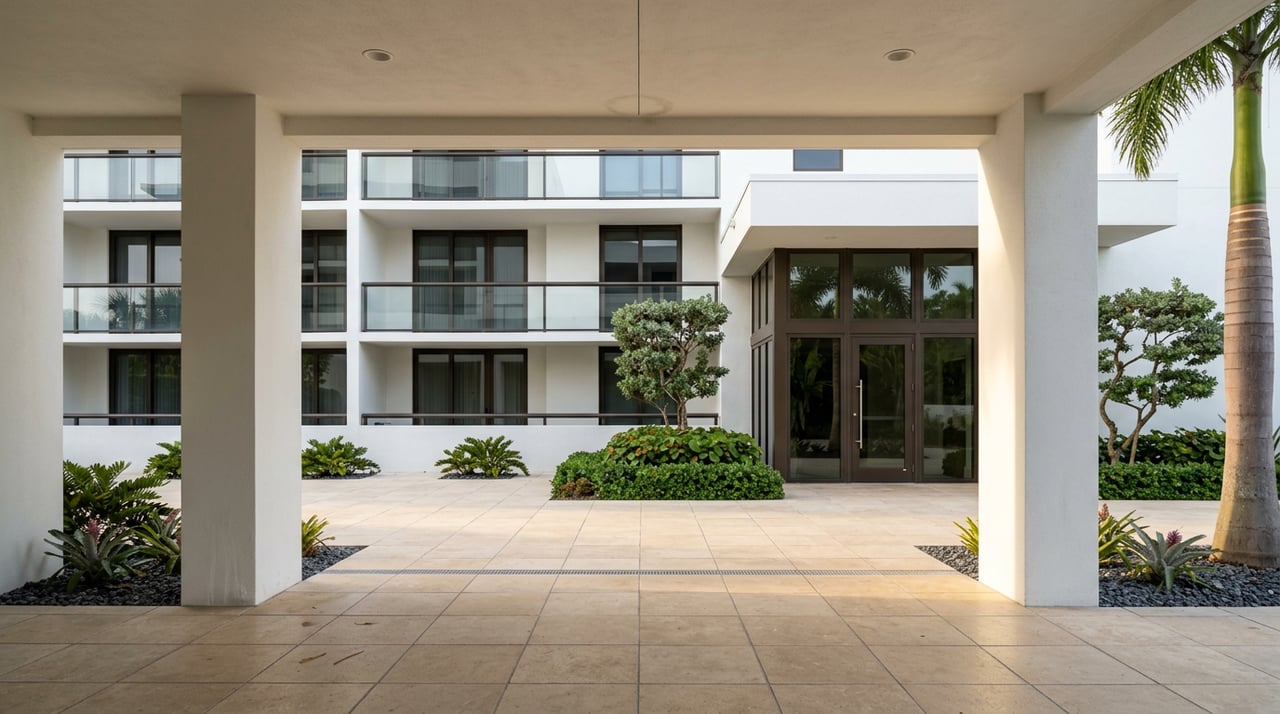
Picture two Pelican Bay condos on the market at the same time. Same price band, same tower height, same Gulf-facing stack, same fresh coat of paint on the lanai. One goes under contract in three weeks. The other sits through an entire season, price cuts and all, while showings quietly dry up. The difference isn't staging. It's a stack of engineering reports sitting in a filing cabinet at the association office, and whether that stack is complete.
That's the reality Pelican Bay sellers are running into in 2026, and it has little to do with the renovation budget or the floor. It has to do with whether the building's Structural Integrity Reserve Study and milestone inspection are filed, funded, and clean.
The Reason Isn't the Renovation
Since the Surfside collapse in 2021, Florida has rewritten how condo buildings prove they're structurally sound. Senate Bill 4-D created the framework in 2022, Senate Bill 154 refined it in 2023, House Bill 1021 added governance and transparency rules in 2024, and House Bill 913 adjusted deadlines and funding flexibility starting July 2025. The mechanics matter less than the deadline that actually landed: as of January 1, 2026, associations can no longer vote to waive or underfund the reserves a SIRS identifies for structural components. For years, plenty of buildings kept dues artificially low by skipping that funding. That option is gone.
Here's where it stops being a compliance story and becomes a transaction story. Fannie Mae and Freddie Mac have tightened their condo project reviews since 2022, and a building with a missing SIRS, a missing milestone inspection, or unresolved deferred maintenance can get flagged non-warrantable. That single flag knocks conventional 30-year financing off the table for anyone trying to buy a unit inside it. The buyer pool shrinks to cash buyers overnight, and a condo in a financially healthy, well-documented association can carry a real premium, somewhere in the range of $20,000 to $75,000 or more, over an equivalent unit in a building with reserve gaps and pending assessments. That premium isn't about the unit at all. It's about the paperwork sitting one floor down in the management office.
Why This Hits Pelican Bay Harder Than Most Naples Addresses
Most of Pelican Bay's housing stock went up in the 1980s and 1990s. That matters because Florida's milestone-inspection trigger arrives at 30 years for most buildings, but at 25 years for anything within three miles of the coast, which describes essentially every high-rise along Pelican Bay Boulevard. A meaningful share of the community's towers are now past that threshold or approaching it fast.
Statewide, industry estimates suggested more than half of eligible Florida condos still hadn't completed their SIRS as of early 2026. There's no Pelican Bay-specific figure to point to, but there's no reason to assume this community is an exception to a trend affecting buildings its own age up and down the coast. Some Pelican Bay associations are ahead of this. Some almost certainly aren't, and their owners may not fully realize it yet.
Layer in Epique, the community's final new-construction high-rise on Pelican Bay's last available site. Suffolk Construction broke ground in March 2026, and completion is targeted for the fourth quarter of the year. New construction sidesteps the milestone requirement for decades and only needs a SIRS within the first year after conveyance to a non-developer owner. For a cash buyer who wants zero paperwork risk, Epique is a real alternative sitting in the same zip code as every older tower nearby. That pulls a slice of demand away from aging buildings, which makes the compliance gap between a clean older building and an uncertain one even more visible to whoever's still shopping there.
What "Clean" Actually Looks Like
Brighton, a Bay Colony tower inside Pelican Bay, is a useful example of the other end of this. Its milestone inspection and a new SIRS are both complete, and the building wrapped up a front-entrance and pool-deck refurbishment this past spring, on schedule for an April 2026 finish. That's not a marketing claim, it's a paper trail a listing agent can hand a buyer's lender without hesitation.
Compliance status is only one axis, though. Pelican Bay's roughly 95 separate condo associations each set their own budget and staffing scope, and those differences are real even between buildings that look identical from the beach. Marbella runs a service-forward model with concierge staff, room service, formal and informal dining rooms, and an on-site beauty and barber shop, all of which lives inside its dues. Serendipity, a 66-unit low-rise with its own pool and clubhouse, and Calais, at 131 residences with its own board, structure dues around a leaner footprint. Stratford, a 22-story tower of 81 residences near Waterside Shops and Artis-Naples, carries a full high-rise operating profile. A seller today needs to be fluent in both dimensions, what the building costs to run and whether its structural paperwork is current, because buyers are increasingly asking about both in the same showing.
The Document Stack a Seller Needs Before the Sign Goes Up
Before a Pelican Bay listing goes live, a seller should have these ready, not promised:
- The latest milestone inspection report, including any engineer's opinion of probable cost, and the Phase 2 report if one was triggered
- The current SIRS, with the funded percentage of each structural item and its remaining useful life, not just confirmation that a report exists
- Two years of adopted budgets and actual financials, compared against what the SIRS funding schedule calls for
- Five years of special assessment history, both levied and any still pending
- Board meeting minutes from the past 12 to 24 months, since boards typically discuss a repair or an assessment long before it's ever formally mailed to owners
- The building's own HOA dues alongside the Pelican Bay Foundation's numbers: the FY2026 annual assessment of $3,295 per assessable unit, roughly $275 a month, plus the Foundation's $10,000 capital resale fee, both separate from whatever the building itself charges
- The Pelican Bay Services Division line on the county tax bill, which funds street lighting, stormwater, Clam Bay maintenance, and beach renourishment for the whole community. A late-2025 sand restoration project after hurricane damage is a recent example of exactly what that line pays for
None of this belongs in a drawer waiting for a buyer's attorney to ask. Florida law still gives buyers a rescission window once they receive the association's official records, and a document that surfaces late in escrow doesn't just slow a closing, it can end one on a technicality even when the buyer genuinely wants the unit.
The Numbers Still Work, If You're Ready
The top of the Pelican Bay market is proving this out. A $6.4 million Pelican Bay single-family sale closed at 93 percent of list in March 2026, and a January 2026 report showed a $12.125 million Pelican Bay estate also closing at 93 percent, alongside a $9.8 million condo at 90 percent. Well-documented, well-positioned properties are still transacting close to asking.
Set that against the broader Pelican Bay condo picture as of May 2026: a median sale price near $1,595,000, but an average of 151 days on market against a national average of 58, with a February 2026 read showing 67 median days to pending. A 151-day average isn't one market, it's the blended average of two very different ones, a fast-moving pool of compliant, well-documented listings and a slow-moving pool where a lender quietly declined to finance the building. Which pool a Pelican Bay seller lands in has almost nothing to do with the unit and almost everything to do with what's sitting in the association's files on the day the listing goes live.
Why Waiting Doesn't Make This Easier
Reserve funding is mandatory now, not optional, so a building that hasn't started catching up is accruing the bill rather than avoiding it. Every month that passes without the SIRS filed or the reserve gap addressed is a month closer to a special assessment landing on whoever owns the unit when it's approved. Meanwhile Epique's fourth-quarter 2026 delivery gives paperwork-averse cash buyers a brand-new option in the same community. A seller sitting on a compliant building has a genuine argument to make this season. A seller sitting on an unresolved one is racing a delivery date they don't control.
One way to think about the two reports at the center of all this: the milestone inspection identifies what needs fixing, and the SIRS is the plan for how the building pays for it. A seller who can produce both, current and complete, is offering a buyer's lender something to say yes to.
FAQ
Does a rumored assessment that hasn't been formally voted still need to be disclosed? Florida's material-facts standard leans toward disclosure once a seller has real knowledge, and board minutes discussing a repair or a likely assessment usually count. An assessment that's already been voted and recorded typically follows the unit and the buyer inherits the remaining balance at closing, while anything still informal is worth a direct conversation with a real estate attorney before the listing goes live.
Who actually pays for the milestone inspection? The association pays, which means the cost is spread across all unit owners rather than billed to a buyer at closing. What a buyer is really pricing into an offer is the risk the inspection uncovers, not the inspection fee itself.
If a building's SIRS is complete, does that mean no future assessment? No. A completed SIRS is a funding plan, not a guarantee. If the reserve balance is already behind what the schedule calls for, catch-up funding or a special assessment is still likely regardless of whether the report itself is filed. The number that matters to a buyer is the funded percentage, not just the fact that a report exists.
Can I list before my building's SIRS is finished? Yes, but disclose it plainly. Buyers and their agents are asking about SIRS and milestone status earlier in the process than they used to, and a listing that gets ahead of the question tends to hold momentum better than one where the gap surfaces mid-escrow.
If you're weighing whether to list a Pelican Bay condo this year, the building's paperwork is worth a conversation before the photographer shows up. Michael Moreiras works this market building by building, not just unit by unit, and can help you pull together what a lender and a buyer will actually want to see before the first showing. Let's connect.