Selling a waterfront home in the Moorings is not like selling a typical Naples property. Buyers are looking at more than finishes and square footage. They are also paying close attention to your dock, seawall, outdoor living areas, water access, and the paper trail behind every improvement. If you want to make your home feel move-in ready and negotiation-ready, the right preparation can make a meaningful difference. Let’s dive in.
Why Moorings waterfront homes need a different plan
The Moorings is a mature coastal neighborhood in Naples that spans more than 1,300 acres and includes roughly 4,000 homes and condominiums. It sits between Coquina Sands and Park Shore, with Gulf and beach access through Doctors Pass. That setting shapes how buyers evaluate value.
In a waterfront sale here, your home is not judged only as a house. It is also judged as a waterfront property with infrastructure that affects daily use and long-term upkeep. Buyers often read the condition of the seawall, dock, view corridor, and outdoor spaces as part of the full package.
That matters even more because Moorings has a mix of older homes, preserved classics, and newer rebuilt or heavily renovated properties. As a seller, you are often competing with homes that either tell a strong story of careful preservation or a clear story of updated construction. Your job is to make your home’s story easy to understand and easy to trust.
Start with documentation before cosmetics
Before you schedule photos or bring in staging, gather your records. In many waterfront sales, paperwork can shape buyer confidence almost as much as appearance. A clean, organized file helps reduce uncertainty early.
For a Moorings waterfront home, your pre-list file should go beyond the basics. Buyers may want to review flood-related documents, elevation or survey records, permit history, and maintenance records for marine improvements.
Key records to assemble
- Flood disclosure information required under Florida law
- Elevation certificate, if available
- Existing survey or site plan
- Permit records for renovations and additions
- Permit and maintenance records for docks, seawalls, boatlifts, or riprap
- Roof and major system records
- Sewer lateral records, if relevant
- Receipts or service history for waterfront maintenance
Florida’s flood disclosure law, effective October 1, 2024, requires sellers of residential real property to provide a flood disclosure at or before contract execution. The form asks whether you have filed flood claims or received federal assistance for flood damage, and it reminds buyers that standard homeowners insurance does not cover flood damage.
In Collier County, an elevation certificate may be needed to purchase flood insurance or to remove a federal flood-insurance purchase requirement. The county also notes that flood coverage is separate from a homeowners policy and often carries a 30-day waiting period. That is one reason buyers may ask for flood-related documents early.
If your home has had work done near the water, documentation becomes even more important. In Collier County, marine improvements such as docks, seawalls, boatlifts, and marine demolition have their own permit path. In many cases, permits from the U.S. Army Corps of Engineers and the Florida Department of Environmental Protection are required before the county issues building permits for seawalls, riprap, and boat docks.
Review flood and permit issues early
Waiting until you are under contract to sort out flood and permit questions can create delays. Buyers for waterfront homes tend to ask detailed questions sooner, especially when they are comparing multiple properties in the same area.
Collier County reviews all development within Special Flood Hazard Areas, including VE, AE, AH, and A zones. The county also states that new residential structures in those areas must elevate the lowest living floor above base flood elevation plus 1 foot. If your home was rebuilt, improved, or expanded, buyers may want confirmation that the work aligns with the local record.
Naples also requires marine permits for certain shoreline and water-related work. Construction or repair of riprap requires a marine permit, and seawalls and revetments must be kept in good repair. On natural waterways, riprap must be placed at the base of new and repaired seawalls.
Questions to answer before listing
- Do you have a current flood disclosure ready?
- Can you easily explain any prior flood claim history?
- Do your records show when waterfront work was completed?
- Were dock, seawall, or shoreline improvements permitted?
- Is there any exterior or marine work that was started but not fully finished?
- Do you have clear records for major renovations or rebuild work?
If there are gaps, it is better to identify them before your home hits the market. A buyer can accept an older home or a classic property with character. What creates concern is uncertainty.
Fix the small issues buyers notice first
Many waterfront deals do not get complicated because of one dramatic defect. More often, momentum slows when small signs of deferred maintenance suggest larger unknowns. That is why pre-list repair work should focus first on visible issues that can trigger buyer concern.
NAR reports that pre-list inspections can help reduce surprises, guide what to fix, and prevent later repair disputes. For an older Moorings home, that can be especially useful because buyers are often alert to the difference between age with care and age with neglect.
Common red flags to handle before showings
- Active moisture or musty areas
- Weathered or loose dock components
- Staining near soffits, ceilings, or seawall areas
- Cracked or unfinished exterior surfaces
- Unclear or inconsistent maintenance records
- Mechanical systems that have not been serviced or verified
Even if you plan to sell as-is, buyers still have the right to inspect, and sellers still have to disclose known issues under applicable law. In practice, the best approach is to remove the easy objections before the buyer’s inspector finds them.
For a classic Moorings home, that may mean a broader pre-list inspection approach. For a newer rebuilt home, the focus may shift toward confirming that the work was permitted, documented, and finished cleanly. Both paths lead to the same goal, which is a smoother negotiation.
Make the outdoor spaces feel like living space
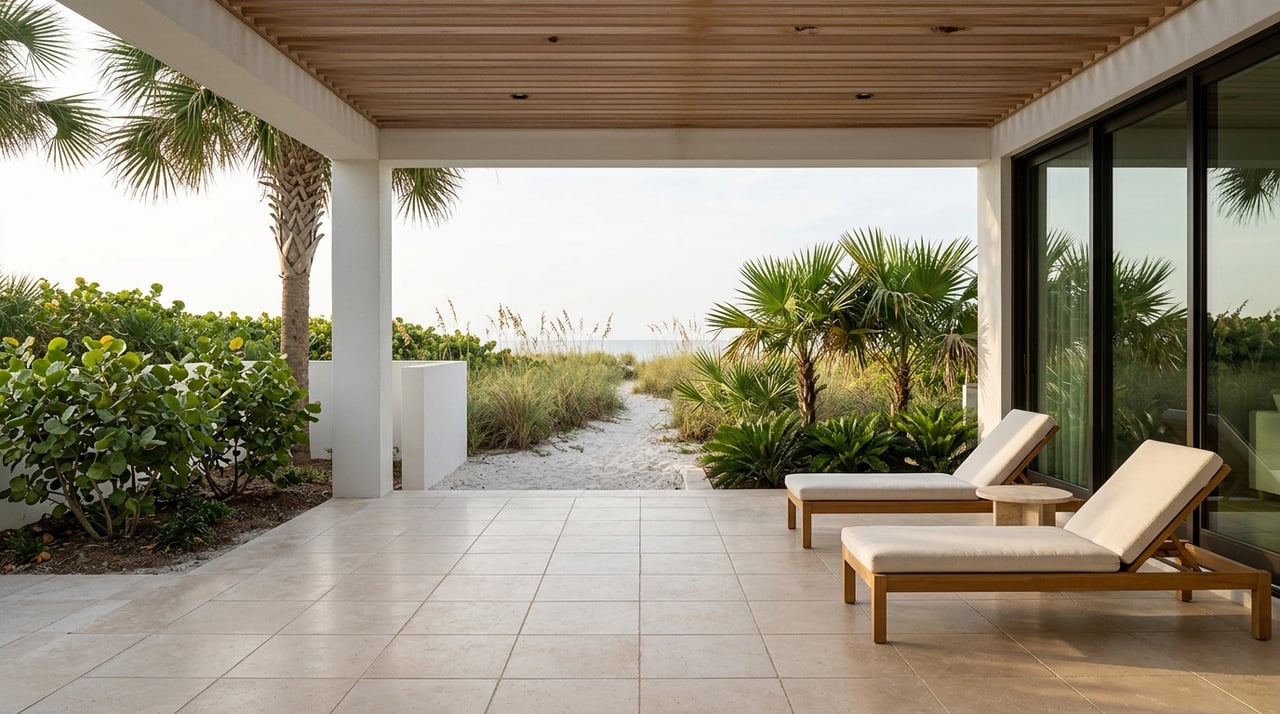
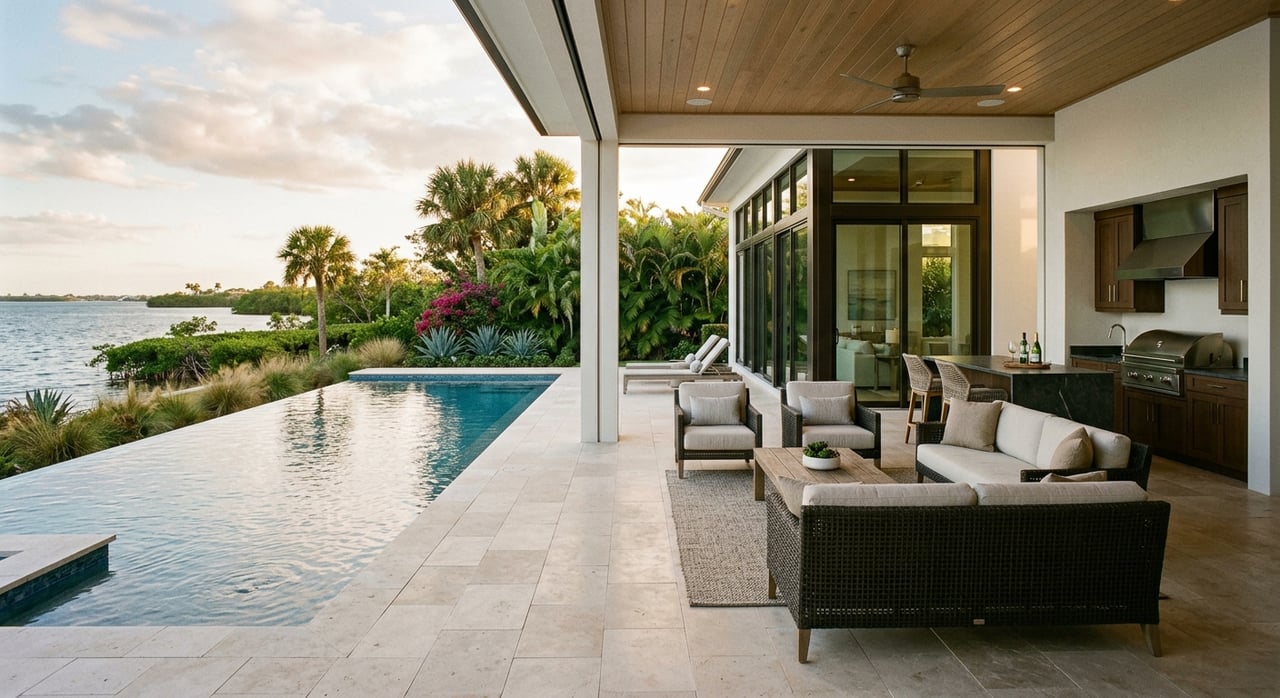
In the Moorings, outdoor living is not a bonus area. It is part of the core value of the property. If your lanai, pool deck, sitting area, dining area, or dock feels empty or forgotten, buyers may struggle to picture the full lifestyle your home offers.
This is where staging can have real impact. NAR’s 2025 staging profile found that 29% of agents said staging produced a 1% to 10% increase in the dollar value offered, and 49% said staging reduced time on market. The same report found that staging helps buyers envision the home as their future residence.
Outdoor staging priorities for a Moorings home
- Define a clear dining area on the lanai or terrace
- Create a comfortable seating area with a purpose
- Keep poolside areas clean, open, and uncluttered
- Make the dock look maintained and usable
- Highlight sightlines to the water
- Remove anything that distracts from light or view
Think of each exterior zone as a room. A buyer should understand where morning coffee happens, where friends gather at sunset, and how the waterfront connects to daily living.
Because buyers in the Moorings often compare older homes with newer rebuilds, the inside still matters too. NAR reports that living rooms, primary bedrooms, and kitchens are the most commonly staged interior spaces. The strongest presentation usually pairs a polished exterior story with a calm, clean interior.
Prepare your home for photos and video
Most buyers will meet your home online before they ever step inside. That makes visual preparation essential, especially in a waterfront market where light, water, and outdoor use are part of the appeal.
NAR reports that photos, videos, and virtual tours are highly important to buyers. Seller agents also most often recommend decluttering, cleaning, and improving curb appeal. For waterfront homes, that means your media should show more than the facade.
What your marketing visuals should capture
- Natural light inside the main living areas
- Eye-level views toward the water
- The relationship between interior rooms and outdoor spaces
- Functional lanai and pool living
- Dock access and waterfront usability
- A clean, well-kept arrival experience from the street
The message should not be just square footage. It should be the experience of living with the water. When your home is prepared correctly, buyers can feel that story right away.
Position your home as well-kept and ready
The strongest seller narrative in the Moorings is simple. Buyers respond well to homes that feel well documented, flood-aware, and outdoor-ready.
That does not mean every home has to look brand new. It means the home should feel cared for, transparent, and easy to evaluate. If buyers can see the maintenance, understand the records, and imagine themselves using the waterfront spaces, your listing is in a much stronger position.
A thoughtful pre-list strategy can also help protect your leverage. When you answer key questions before they become objections, you reduce the chances of late renegotiation, drawn-out due diligence, or closing delays.
If you are thinking about selling a waterfront home in the Moorings, the right preparation starts well before the sign goes up. For a polished, strategic plan tailored to Naples waterfront property, connect with Michael Moreiras Realty PLLC.
FAQs
What should sellers in the Moorings prepare before listing a waterfront home?
- Sellers should gather flood disclosure documents, elevation or survey records, permit history, and maintenance records for docks, seawalls, and other marine improvements before listing.
Why do buyers in the Moorings care about docks and seawalls?
- In a Moorings waterfront sale, buyers often evaluate the dock, seawall, outdoor living space, and water access as part of the property’s overall value and upkeep.
Does Florida require flood disclosure when selling a home in Naples?
- Yes. Florida law requires sellers of residential real property to provide a flood disclosure at or before contract execution.
Are marine permits important for waterfront homes in Collier County?
- Yes. Collier County has separate permit requirements for marine improvements such as docks, seawalls, boatlifts, and related work, and buyers may want to see those records.
Should you stage outdoor areas when selling a Moorings waterfront home?
- Yes. Outdoor areas such as the lanai, pool deck, dining space, seating area, and dock should be presented as functional living spaces, not leftover space.
What repairs matter most before listing a waterfront home in the Moorings?
- The most important pre-list repairs are often visible maintenance issues like moisture, dock wear, staining, unfinished exterior work, and unverified mechanical or exterior systems.